
From Evidence to Action: PAN International at the Healthy Diet, Healthy Life Conference 2026
On 21 April 2026, PAN International’s EU Public Affairs Officer, Federica Amiconi, attended the Healthy Diet, Healthy Life (HDHL) Conference 2026: From Evidence to Action – Connecting Food, Nutrition, and Health in Brussels, a high-level gathering focused on how scientific evidence can be translated into meaningful policy action.
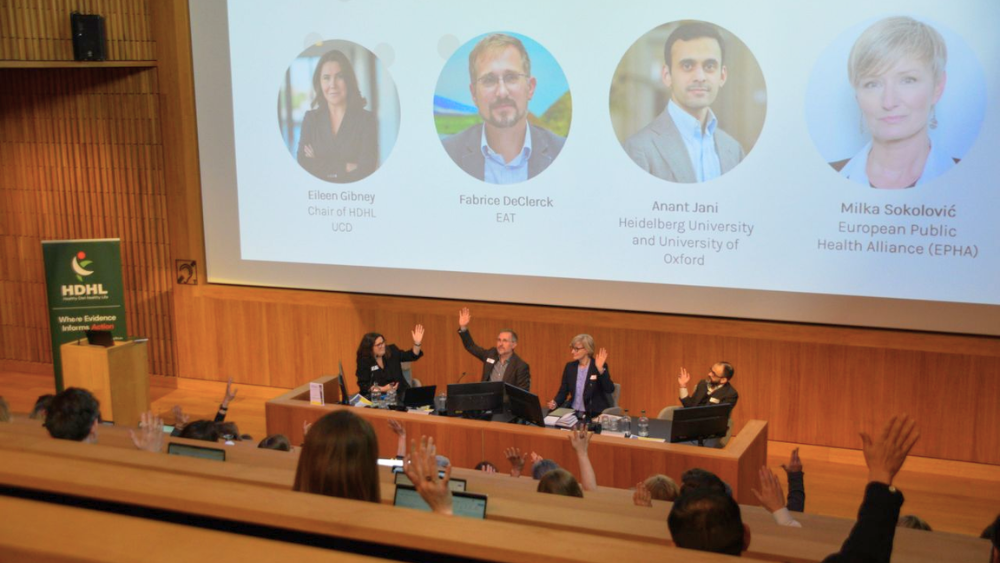
The event brought together researchers, policymakers, civil society organisations, industry stakeholders, and representatives from the European Commission and WHO/Europe to explore the drivers shaping Europe’s food environments and the policy levers needed to support healthier, more sustainable societies.
For PAN International, the conference reflected a central priority of our work: ensuring that evidence on nutrition, health and sustainability is not only discussed, but translated into policies, healthcare practice and food environments that support healthier people and a healthier planet.
Shaping healthier food environments
A key discussion at the conference focused on the need to reshape Europe’s food environments so that healthier and more sustainable choices become easier, more accessible and more equitable.
During a panel chaired by Eileen Gibney, Chair of HDHL and Professor of Nutrition and UCD Director of Food and Health, speakers explored the regulatory and policy tools needed to accelerate progress. The panel featured Milka Sokolovic, Director of the European Public Health Alliance, Fabrice De Clerck, Chief Science Officer at EAT, and Anant Jani, Senior Researcher at Heidelberg University and the University of Oxford.
Key policy levers discussed included:
restricting the advertising of unhealthy foods to children
introducing mandatory, harmonised front-of-pack nutrition labelling
strengthening public food procurement standards
using fiscal measures to incentivise healthier foods and discourage unhealthy products
supporting farmers and producers to transition towards the production of healthier foods
These discussions highlighted an important point: individual food choices are shaped by the environments in which people live, work, learn and receive care. Policy has a critical role to play in making healthier and more sustainable choices easier in everyday life.
Food systems, health and planetary boundaries
The conference also reinforced the close connection between food systems, human health and planetary health.
Fabrice De Clerck presented findings from the October 2025 EAT-Lancet report, underscoring how food systems are now the single greatest driver of planetary boundary transgressions.
For healthcare and public health communities, this message is increasingly important. Dietary patterns influence both disease risk and environmental impact. Policies that support healthier, more sustainable diets can therefore contribute to multiple goals at once, from chronic disease prevention to climate resilience and more sustainable food systems.
From evidence to implementation
A recurring theme throughout the event was the need to move from evidence to implementation.
Speakers emphasised that while the evidence base for healthier and more sustainable food systems continues to grow, progress depends on translating that evidence into policy, regulation, institutional practice and accountability.
This is where civil society has a vital role to play. Civil society organisations can help bridge the gap between research and policy by translating scientific evidence into clear recommendations, building coalitions, supporting public understanding and holding decision-makers accountable.
For PAN International, this bridging role is central to our mission as a medical organisation working at the intersection of nutrition, healthcare and planetary health.
Policy opportunities ahead
The conference also highlighted several EU policy processes that offer important opportunities to embed scientific evidence into legislation and implementation.
These include the EU Safe Hearts Plan, the post-2027 Common Agricultural Policy, and the revision of EU Public Procurement Directives.
Each of these processes offers a potential entry point for advancing healthier and more sustainable food environments across Europe. Public procurement, in particular, has significant potential to influence the food served in schools, hospitals, universities and other public institutions.
PAN International’s continued engagement
The HDHL Conference 2026 reinforced a clear message: evidence is essential, but evidence alone is not enough.
To improve health outcomes and support more sustainable food systems, research must be translated into policy, policy must be translated into practice, and practice must be supported by systems that make healthier choices possible.
PAN International will continue engaging with European policy processes, healthcare communities and civil society partners to help ensure that the best available evidence informs the future of food, nutrition and health.