
Do Protein Choices Belong in GP Consultations?
Why doctors should discuss plant-forward nutrition in routine care
This English blog post is adapted from “Bespreek plantaardige voeding in de spreekkamer”, an original article first published in Huisarts en Wetenschap (H&W) by Dr Marieke Kerstens, Marieke van de Put & Anna Kretova (PAN Netherlands)
International guidelines recommend eating less red and processed meat and more legumes, nuts, and other plant protein sources. This shift, often described as the protein transition, presents an important opportunity to improve public health and reduce environmental impact.
Yet general practice is still not making full use of nutrition as a tool for prevention and care. In this article, we explore why GPs are well placed to support both patient health and planetary health.
Poor diet is a major risk factor for ill health and premature death. It leads to more deaths than alcohol, drugs, and smoking combined.¹ In many countries, chronic disease is rising and affecting people earlier in life, reinforcing the need to make nutrition a more routine part of prevention and care.
Climate change is also increasingly affecting health, with heatwaves, air and water pollution, allergies, and infectious diseases becoming more common.⁴ ⁵ Shifting from animal to plant protein sources can support both climate goals and better health, while helping to prevent chronic disease.⁶ ⁷ GPs can play an important role by making nutrition part of routine conversations in practice.
Role of the GP
Most people see their GP as a trusted source of nutrition information.⁸ In one study, 78% of patients reported changing their eating habits after discussing diet with their GP or another doctor.⁹ As more patients raise questions about nutrition, health, and climate, it is time for plant-forward nutrition to have a clearer place in the consultation room.
The Impact on Health
There is growing evidence that dietary patterns centred on plant protein sources are associated with a lower risk of premature death, cardiovascular disease, type 2 diabetes, and obesity.⁷ Current guidance increasingly recommends reducing red and processed meat intake and choosing plant alternatives such as legumes more often.¹³ ¹⁶ ¹⁷
Recent studies strengthen this picture. Higher animal protein intake has been associated with increased mortality risk and a higher risk of type 2 diabetes, while processed and red meat are linked to greater risk of type 2 diabetes and colorectal cancer.¹⁸–²²
Higher plant protein intake in midlife has also been associated with a greater likelihood of healthy ageing, including disease-free functioning without cognitive or physical limitations.²³
There is also growing evidence that vegetarian and plant-based dietary patterns can reduce disease burden and, in some cases, support remission across a range of conditions, including overweight and obesity, cardiovascular disease, type 2 diabetes, arthritis, fatty liver disease, chronic kidney disease, and prostate cancer.²⁴–³²
Impact on the Climate
Food production is responsible for more than a quarter of greenhouse gas emissions, and animal protein sources generally have a greater impact on emissions, land use, and water use than plant protein sources.³³ ³⁴ The recent EAT-Lancet report concludes that current dietary patterns are a major driver of exceeding 5 of the 9 planetary boundaries.⁷ A shift towards more plant-forward dietary patterns is therefore important not only for health, but also for sustainability.⁷
Guidelines
Across countries, dietary guidance is increasingly recognising the value of shifting towards more plant-based protein sources for both health and sustainability. In the Netherlands, for example, the Health Council has recommended moving towards a more plant-forward protein balance and limiting red and processed meat.¹⁷ ³⁶
While clinical guidelines increasingly acknowledge the importance of healthy nutrition, sustainability is still often underemphasised in routine care.³⁷–³⁹
Start the conversation
A lower intake of animal protein will not be appropriate for every patient, for example those who are underweight or at high risk of malnutrition. But for many patients in general practice, eating more whole plant foods and less red and processed meat is both meaningful and feasible. When nutrition is treated as a core part of care, even small, practical steps can help patients improve their health and quality of life while contributing to the wider protein transition.
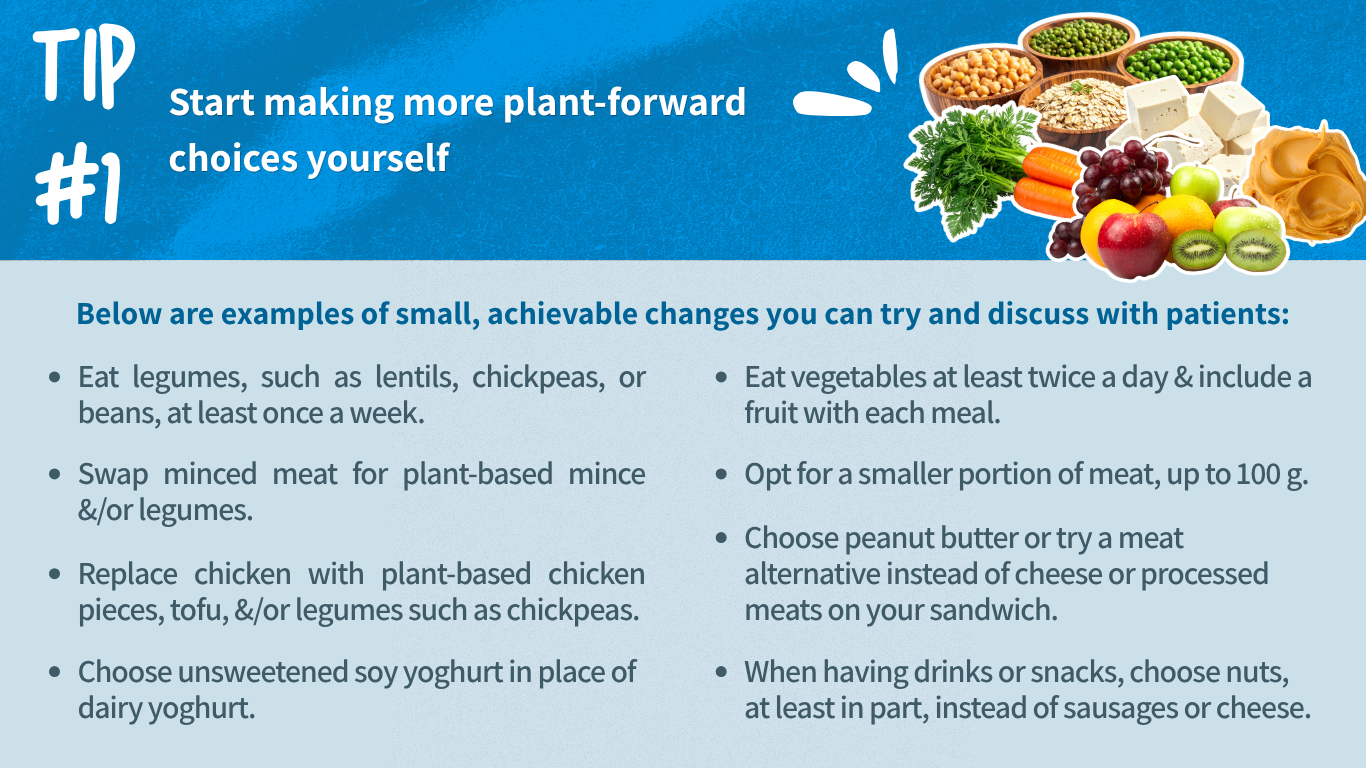
The protein transition is not an end in itself, nor is it solely the responsibility of the GP. It is one route towards better health and a more liveable planet. GPs are uniquely placed to connect individual health with planetary health. This does not mean providing detailed nutrition counselling or expecting every patient to adopt a fully plant-based diet. It does mean being able to highlight the health benefits of eating more minimally processed plant foods and supporting patients to take realistic first steps. By normalising these conversations during consultations, GPs can strengthen awareness, support self-management, and encourage behaviour change.
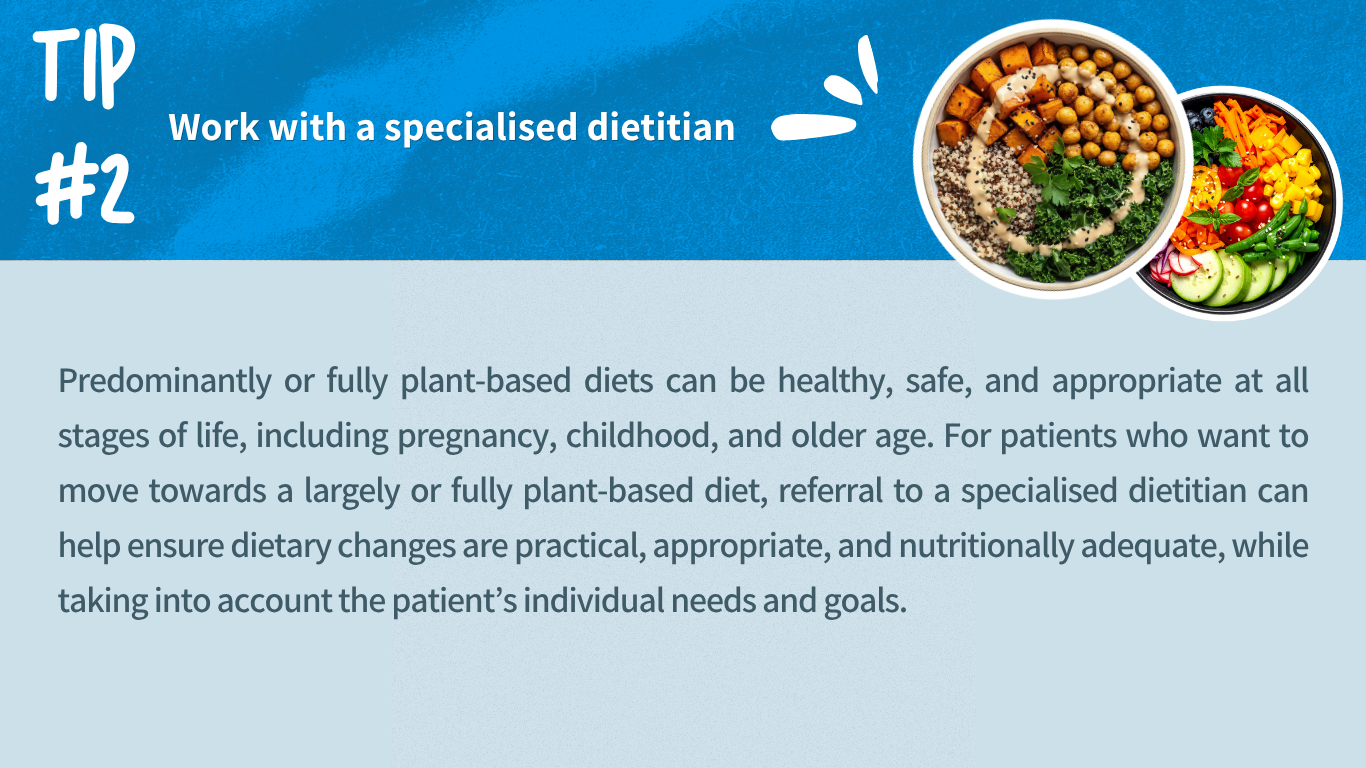
General practitioners have enormous reach. Even in one country, thousands of GPs may each see well over a thousand patients a year. That creates a powerful opportunity to influence everyday food choices, not only for individual patients, but often for households too. It is an opportunity worth using for the health of people and the planet.
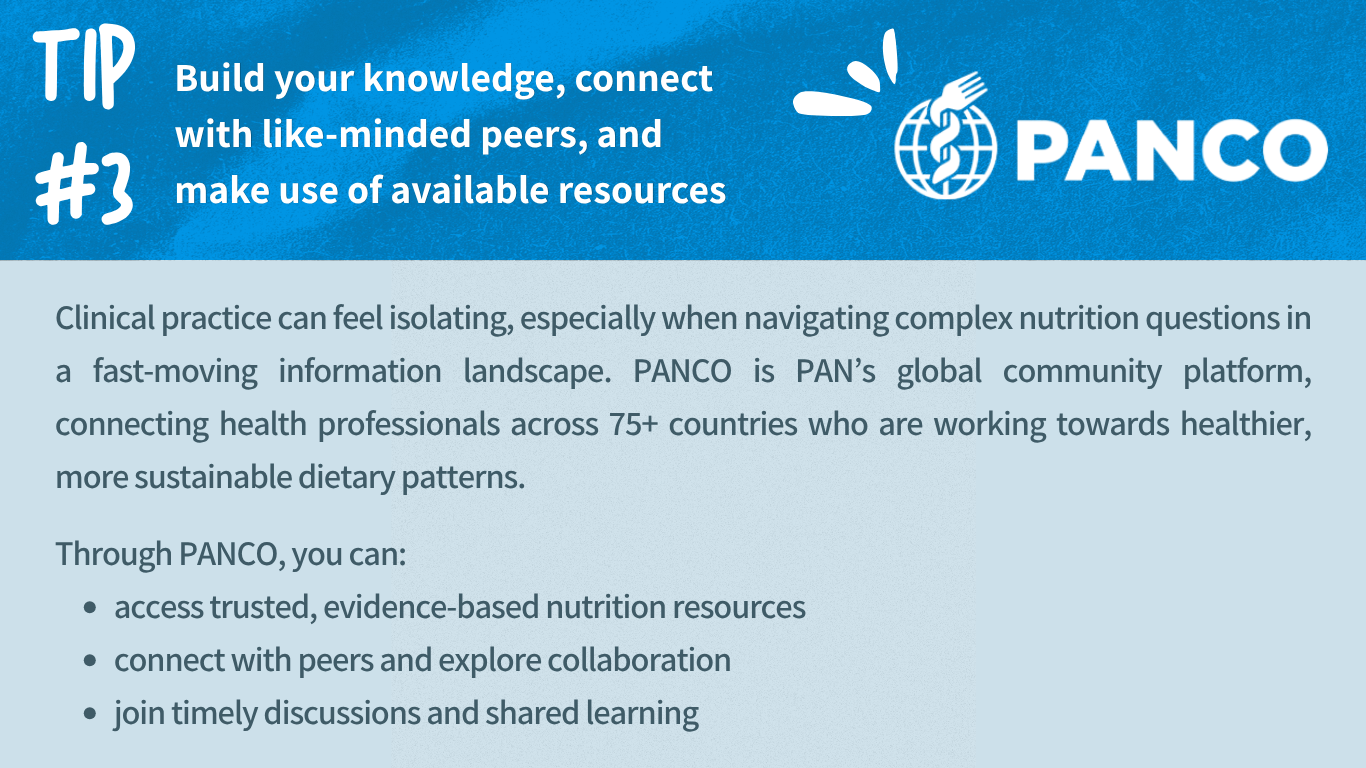
Clinicians do not need to do this work alone. Professional networks, dietitians, evidence-based tools, and practical patient resources can all help make nutrition conversations more feasible in routine care. Sign up for PANCO here.
References & Further Reading
The sources below include the references cited in the original article, along with additional background reading relevant to this adapted version.
1.Stanaway JD, Afshin A, Gakidou E, Lim SS, Abate D, Abbafati C, et al. Global, regional, and national comparative risk assessment of 84 behavioural, environmental and occupational, and metabolic risks or clusters of risks for 195 countries and territories, 1990-2017: a systematic analysis for the Global Burden of Disease Study 2017. Lancet 2018:10;392(10159):1923-94. DOI: 10.1016/S0140-6736(18)32225-6.
2.RIVM. Chronische aandoeningen en multimorbiditeit: leeftijd en geslacht (2024). https://www.vzinfo.nl/chronische-aandoeningen-en-multimorbiditeit/leeftijd-en-geslacht, geraadpleegd op 3 september 2025.
3.Centraal Bureau voor de Statistiek. Gezonde levensverwachting; vanaf 1981 (2025). https://www.cbs.nl/nl-nl/cijfers/detail/71950ned, geraadpleegd op 29 juni 2025.
4.IPCC. Climate change 2023. Synthesis report. Contribution of Working Groups I, II and III to the Sixth Assessment Report of the Intergovernmental Panel on Climate Change. Geneva: IPCC, 2023. DOI:10.59327/IPCC/AR6-9789291691647.
5.Betgen CD, Boekhold S, Boomsma C, Van Dijk A, Van Hall EF, Hagens W, et al. Gezondheidseffecten van klimaatverandering. Actualisatie van de huidige klimaatrisico’s voor gezondheid. Bilthoven: RIVM; 2024.
6.Crippa M, Solazzo E, Guizzardi D, Montforti-Ferrario F, Tubiello FN, Leip Al. Food systems are responsible for a third of global anthropogenic GHG emissions. Nat Food 2021;2:198-209. DOI:10.1038/s43016-021-00225-9.
7.Rockström J, Thilsted SH, Willet W, Gordon LJ, Herrero M, Hicks CC, et al. The EAT–Lancet Commission on healthy, sustainable, and just food systems. Lancet 2025;11;406(10512):1625-1700. DOI: 10.1016/S0140-6736(25)01201-2.
8.NVVL, GfK. Voedseltrends (2015). https://www.nedverbak.nl/uploads/2019/04/rapportage-nvvl-gfk_voedseltrends1.pdf, geraadpleegd op 29 juni 2025.
9.International Food Information Council Foundation. 2018 Food and Health Survey (2018). https://foodinsight.org/wp-content/uploads/2018/05/2018-FHS-Report.pdf, geraadpleegd op 29 juni 2025.
10.Sociaal en Cultureel Planbureau. Tussen duurzaam denken en duurzaam doen (2024). https://www.scp.nl/publicaties/publicaties/2024/04/23/tussen-duurzaam-denken-en-duurzaam-doen, geraadpleegd op 29 juni 2025.
11.ProVeg Nederland. Het plantaardig potentieel van Nederland. Draagvlak voor de eiwittransitie. Utrecht: ProVeg Nederland; december 2024.
12.Medisch Contact. Minder vlees eten? De helft van de artsen bespreekt dit nooit (2024). https://www.medischcontact.nl/actueel/laatste-nieuws/nieuwsartikel/minder-vlees-eten-de-helft-van-de-artsen-bespreekt-dit-nooit, geraadpleegd op 29 juni 2025.
13.Danish Veterinary, Food, Agriculture and Fisheries Agency. The official dietary guidelines – good for health and climate (2024). https://en.foedevarestyrelsen.dk/Media/638763479562971159/NY_FINAL_ENG_Kostr%C3%A5d_pjece_WEB_210x280mm_2024_ver04.pdf, geraadpleegd op 29 juni 2025.
14.Spanish Agency for Food Safety and Nutrition (AESAN). Healthy and sustainable dietary recommendations: supplemented with physical activity recommendations for the Spanish population. Spanish Agency for Food Safety and Nutrition; 2022 Dec. Beschikbaar via: https://www.aesan.gob.es/AECOSAN/docs/documentos/nutricion/RECOMENDACIONES_DIETETICAS_ING.pdf.
15.Austrian Agency for Health and Food Safety (AGES). Health for humans, animals & plants. Austrian nutritional recommendations (2025). https://www.ages.at/en/human/nutrition-food/nutrition-recommendations/new-nutritional-recommendations, geraadpleegd op 25 juni 2025.
16.Health Canada. Canada’s dietary guidelines. Ottawa: Minister of Health; 2019. Publication number 170462.
17.Gezondheidsraad. Richtlijnen goede voeding: eiwitbronnen en voedingspatronen 2025. Den Haag: Gezondheidsraad, 2025, Nr. 2025/19.
18.Chen Z, Glisic M, Song M, Aliahmad HA, Zhang X, Moumdjian AC, et al. Dietary protein intake and all-cause and cause-specific mortality: results from the Rotterdam Study and a meta-analysis of prospective cohort studies. Eur J Epidemiol 2020;35(5):411-29. DOI:10.1007/s10654-020-00607-6.
19.Ardakani AF, Anjom-Shoae J, Sadeghi O, Marathe CS, Feinle-Bisset C, Horowitz M. Association between total, animal, and plant protein intake and type 2 diabetes risk in adults: a systematic review and dose-response meta-analysis of prospective cohort studies. Clin Nutr 2024;43(8):1941-55. DOI:10.1016/j.clnu.2024.07.001.
20.Huang J, Liao LM, Weinstein SJ, Sinha R, Graubard BI, Albanes D. Association between plant and animal protein intake and overall and cause-specific mortality. JAMA Intern Med 2020;180(9):1173-84. DOI:10.1001/jamainternmed.2020.2790.
21.Xu X, Yu E, Gao X, Song N, Liu L, Wei X, et al. Red and processed meat intake and risk of colorectal adenomas: a meta-analysis of observational studies. Int J Cancer. 2013;132(2):437–48. DOI:10.1002/ijc.27625
22.World Cancer Research Fund/American Institute for Cancer Research. Diet, nutrition, physical activity and cancer: a global perspective. Continuous Update Project Expert Report 2018. https://www.dietandcancerreport.org, geraadpleegd op 29 juni 2025.
23.Korat AVA, Shea MK, Jacques PF, Sebastiani P, Wang M, Eliassen AH, et al. Dietary protein intake in midlife in relation to healthy aging – results from the prospective Nurses’ Health Study cohort. Am J Clin Nutr 2024;119(2):271-82. DOI: 10.1016/j.ajcnut.2023.11.010.
24.Austin G, Ferguson JJ, Garg ML. Effects of plant-based diets on weight status in type 2 diabetes: a systematic review and meta-analysis of randomised controlled trials. Nutrients 2021;13(11):4099. DOI:10.3390/nu13114099.
25.Sebastian SA, Padda I, Johal G. Long-term impact of Mediterranean diet on cardiovascular disease prevention: a systematic review and meta-analysis of randomized controlled trials. Curr Probl Cardiol 2024;49(5):102509. DOI:10.1016/j.cpcardiol.2024.102509.
26.Jenkins DJA, Kendall CWC, Marchie A, Faulkner DA, Wong JMW, De Souza R, et al. Effects of a dietary portfolio of cholesterol-lowering foods vs lovastatin on serum lipids and C-reactive protein. JAMA 2003;290(4):502-10. DOI:10.1001/jama.290.4.502.
27.Houweling B, Bakker S, Brinkers M, Hart B. Onbewerkte plantaardige voeding belangrijk voor mensen met DM2. Huisarts Wet 2023;66:DOI: 10.1007/s12445-023-2313-9.
28.Yokoyama Y, Barnard ND, Levin SM, Watanabe M. Vegetarian diets and glycemic control in diabetes: a systematic review and meta-analysis. Cardiovasc Diagn Ther 2014;4(5):373-382. DOI:10.3978/j.issn.2223-3652.2014.10.04.
29.Wagenaar CA, Walrabenstein W, Van der Leeden M, Turkstra F, Gerritsen M, Twisk JW, et al. Long-term effectiveness of a lifestyle intervention for rheumatoid arthritis and osteoarthritis: 1-year follow-up of the ‘Plants for Joints’ randomised clinical trial. RMD Open. 2024;10(1):e004025. DOI:10.1136/rmdopen-2023-004025.
30.Castelnuovo G, Perez-Diaz-Del-Campo N, Rosso C, Armandi A, Caviglia GP, Bugianesi E. A healthful plant-based diet as an alternative dietary approach in the management of metabolic dysfunction-associated steatotic liver disease. Nutrients 2024;16(13):2027. DOI:10.3390/nu16132027.
31.Zarantonello D, Brunori G. The role of plant-based diets in preventing and mitigating chronic kidney disease: more light than shadows. J Clin Med 2023;12(19):6137. DOI:10.3390/jcm12196137.
32.Liu VN, Van Blarigan EL, Zhang L, et al. Plant-based diets and disease progression in men with prostate cancer. JAMA Netw Open 2024;7(5):e249053. DOI:10.1001/jamanetworkopen.2024.9053.
33.Poore J, Nemecek T. Reducing food’s environmental impacts through producers and consumers. Science. 2018;360(6392):987-92.
34.Mbow C, Rosenzweig C, Barioni LG, Benton TG, Herrero M, Krishnapillai M, et al. Food security. In: Climate Change and Land: An IPCC special report on climate change, desertification, land degradation, sustainable land management, food security, and greenhouse gas fluxes in terrestrial ecosystems. Geneva: Intergovernmental Panel on Climate Change; 2019.
35.Li Y, He P, Shan Y, Li Y, Shao S, Ruzzenenti F, et al. Reducing climate change impacts from the global food system through diet shifts. Nat Clim Chang 2024;14:943-53. DOI:10.1038/s41558-024-02084-1.
36.Gezondheidsraad. Gezonde eiwittransitie. Den Haag: Gezondheidsraad; 2023. Publicatienr. 2023/19.
37.NHG-werkgroep Cardiovasculair risicomanagement. NHG-Standaard Cardiovasculair risicomanagement. Utrecht: Nederlands Huisartsen Genootschap, 2024.
38.NHG-werkgroep Diabetes mellitus type 2. NHG-Standaard Diabetes mellitus type 2. Utrecht: Nederlands Huisartsen Genootschap, 2025.
39.Rijksoverheid, Ministerie van Volksgezondheid, Welzijn en Sport (VWS). Green Deal Samenwerken aan Duurzame Zorg. Den Haag: Rijksoverheid, 2018.
40.Flinterman LE, Batenburg R, Kenens RJ, Duijkers B. Huisartsen en praktijken in kaart: cijfers uit Nivel Beroepenregistraties in de Zorg 2023-2024. Utrecht: Nivel, 2025.
41.Schäfer W, Groenewegen P, Van den Berg M. De werkbelasting van huisartsen: Nederland in internationaal perspectief. Utrecht: Nivel, 2016.
42.VZinfo. Eerstelijnszorg. Gebruik. Huisartsenzorg. https://www.vzinfo.nl/eerstelijnszorg/gebruik/huisartsenzorg, geraadpleegd op 29 juni 2025.
43.Melina V, Craig W, Levin S. Position of the Academy of Nutrition and Dietetics: vegetarian diets. J Acad Nutr Diet. 2016;116(12):1970-80. DOI:10.1016/j.jand.2016.09.025.